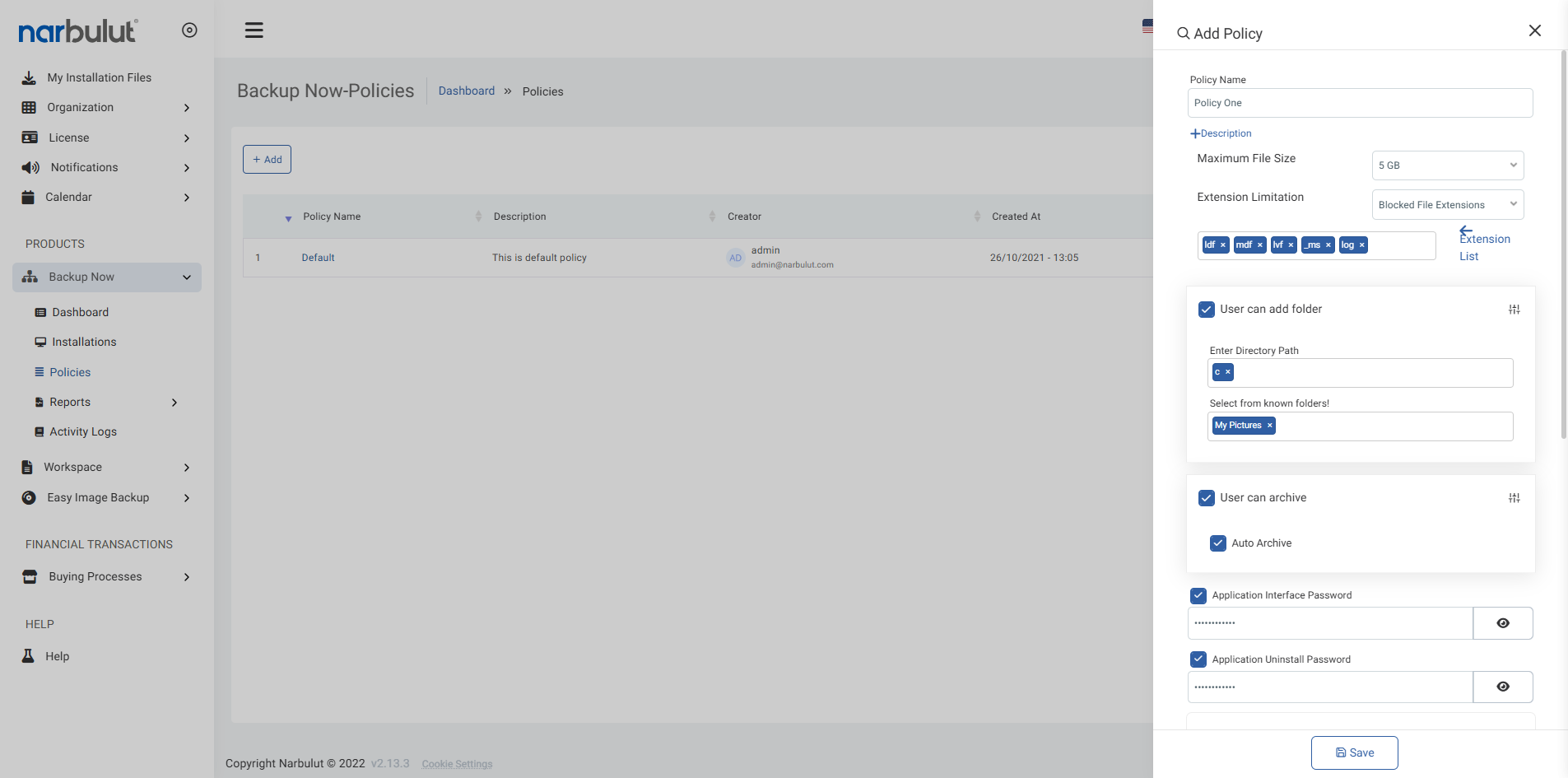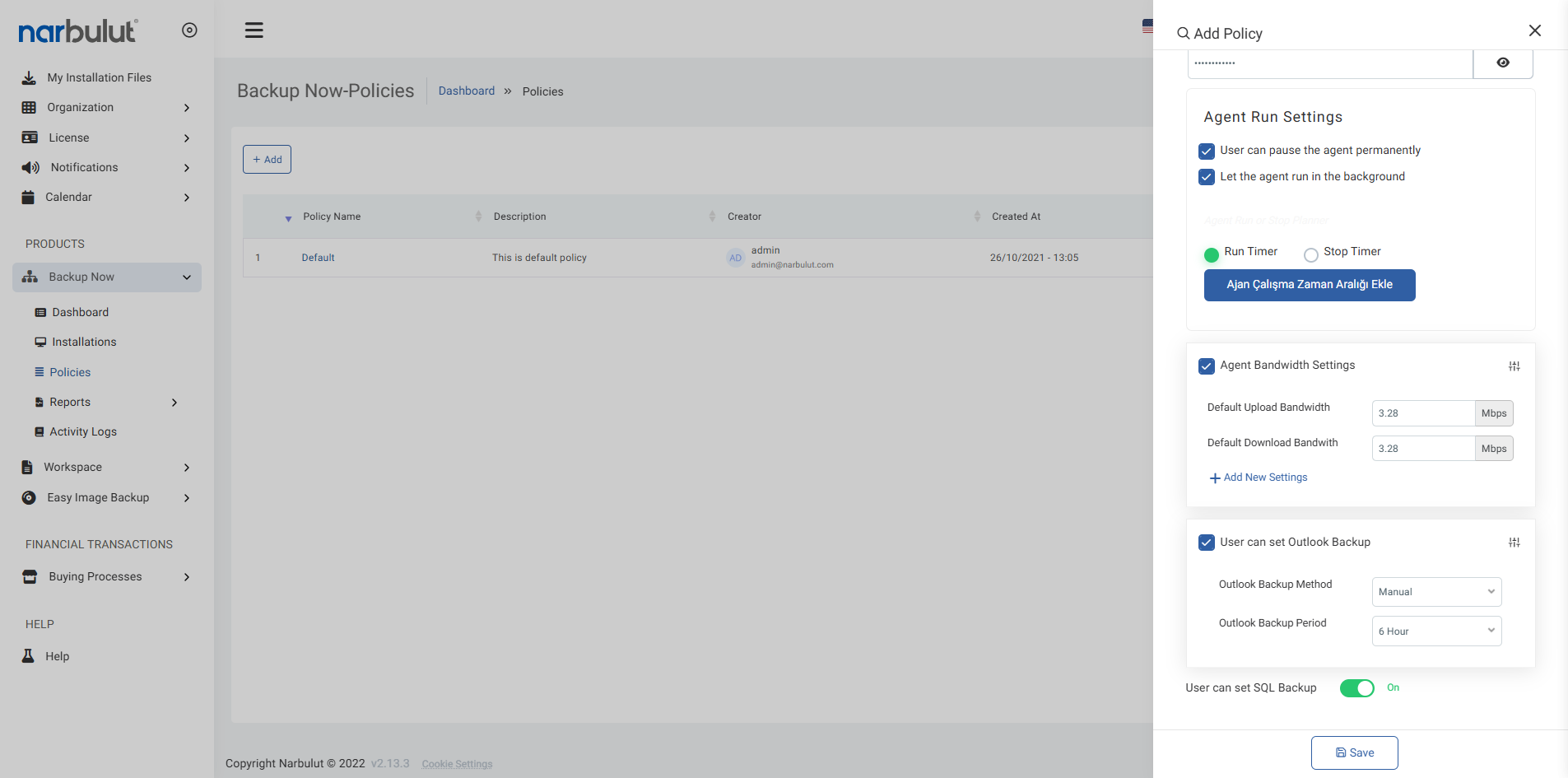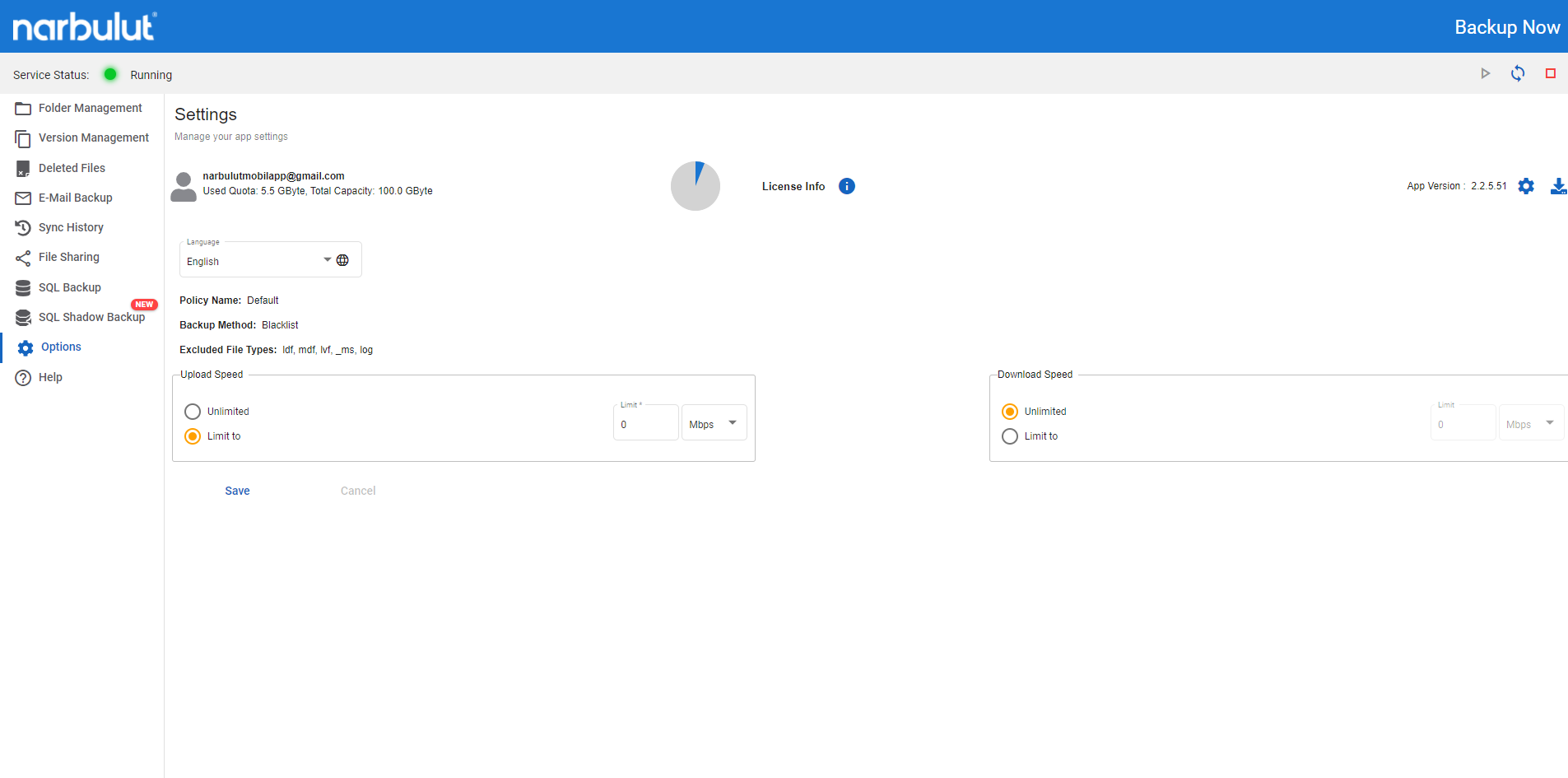
A policy is a set of settings that allows you to centrally define users' backup and system usage rules. It is used for standardization and control purposes.
Settings such as scheduling, file type filters, backup path, bandwidth limit can be controlled by policies.
After the changes are saved, they are automatically applied when the user device is connected to the Narbulut service.
Yes, you can assign a specific policy to each user or define the same policy for more than one user.
Yes, you can apply a single policy to multiple users for ease of centralized management.
The deleted policy becomes invalid to the user. The system redirects the user to default settings.
The maximum file size can be limited by entering it in GB on the policy definition screen.
By entering allowed or prohibited file extensions, only files of the specified type are backed up.
No, only one can be active at a time. The system takes into account one of the allowed or prohibited lists.
Depends on policy settings. If allowed, the user can select folders, otherwise the specified paths are used automatically.
This authority can be assigned to the user by activating archiving permissions in the policy definition.
Yes, the time intervals at which the agent will work can be determined through scheduling settings.
No, the user can only stop it temporarily.
Backup traffic can be limited during peak hours to maintain network performance and ensure business continuity.
Detailed rules can be created by selecting Outlook from the Policy panel.
Policies are applied centrally and automatically, the user cannot make changes. In manual settings, the user configures according to his own preferences.
Narbulut Product Analysis
Step 1/12
What area of technological improvement are you planning for your company?
Data Security & BackupRansomware, deleted files and disaster recovery.
Cloud Server (IaaS)Website, ERP, CRM or application hosting.
Team CollaborationSecure file sharing and remote work.
Object Storage (S3)Object Storage for developers.
What industry does your company operate in?
Healthcare / MedicalPatient data (GDPR critical).
Finance / AccountingSensitive financial data.
Manufacturing / EngineeringCAD drawings and production plans.
Other / General ServicesOffice documents and general data.
What type of devices need to be protected?
Employee ComputersLaptop and desktop end-user devices.
Physical / Virtual ServersDatabase, Active Directory or File Server.
What should your backup strategy be?
File & Folder BasedOnly important business files (XLS, PDF, SQL) should be backed up.
Full Disk ImageBack up "Everything" including the operating system.
What is your upload speed for cloud backup?
Fiber / High SpeedI can send large data quickly.
Standard / ADSLMy speed is limited, compression is important.
Is ransomware a threat?
Yes, Very CriticalWe have experienced it before or are at risk.
Standard Protection is SufficientBasic backup measures are enough.
How long would you like to keep versions?
30 - 90 DaysTo fix recent errors.
1 Year and AboveLegal requirements or archiving.
What will be the primary purpose of the server?
E-Commerce / WebsiteHigh uptime and speed required.
ERP / Accounting SoftwareDatabase performance is important.
Software DevelopmentFlexible resource management.
What infrastructure do you need?
Windows ServerASP.NET, MSSQL, RDP.
Linux (Ubuntu/CentOS)PHP, Python, MySQL, Docker.
What is the estimated user traffic?
Low / MediumEntry level or new project.
High TrafficHeavy campaigns or many users.
Who will manage the server?
I Will Manage ItI have a technical team, root access is enough.
I Need SupportManaged Services required.
How many people will work in the shared workspace?